
Mastering Health News: A Comprehensive 28-Day Guide to Health Literacy
In an era of information overload, staying informed about your health has never been more critical—or more confusing. Between “miracle cures” on social media and contradictory headlines in mainstream media, the average person is often left feeling overwhelmed. Health literacy, the ability to obtain, process, and understand basic health information, is a vital skill that can quite literally save your life. This 28-day guide is designed to transform you from a passive consumer into a savvy master of health news.
Week 1: Building a Foundation of Credibility
The first step in mastering health news is learning where to look. Not all sources are created equal, and the internet is rife with “health influencers” who lack medical credentials. Your goal for the first seven days is to perform a digital audit of your information streams.
- Day 1-2: Understand the Hierarchy of Evidence. Start by learning the difference between a case study, an observational study, and a randomized controlled trial (RCT). RCTs are the “gold standard” because they reduce bias. If a news report is based on a study of five people (a case series), it shouldn’t carry the same weight as a meta-analysis involving thousands.
- Day 3-4: Identify Trusted Institutions. Bookmark sites ending in .gov (like the CDC or NIH) and .edu (academic medical centers like Harvard Health or Mayo Clinic). These institutions have rigorous peer-review processes that personal blogs lack.
- Day 5-7: The “CRAAP” Test. Apply this acronym to every article you read: Currency (is it timely?), Relevance (does it apply to humans or just mice?), Authority (who wrote it?), Accuracy (is there evidence?), and Purpose (is it trying to sell you a supplement?).
Week 2: Decoding Scientific Methodology
Now that you know where to look, you need to understand how to read what you find. Week two focuses on the language of science. Many health news articles “hype” findings by misinterpreting the data.
Understanding Correlation vs. Causation
This is the most common pitfall in health reporting. If a study says “people who drink coffee live longer,” it does not necessarily mean coffee causes longevity. It could be that coffee drinkers are wealthier or more active. During days 8 through 10, practice looking for “confounding variables” in news stories.
Relative vs. Absolute Risk
On days 11 through 14, focus on statistics. A headline might scream, “Eating processed meat increases cancer risk by 20%!” This is relative risk. If your baseline (absolute) risk was 1 in 100, a 20% increase makes it 1.2 in 100. While still important, the absolute risk sounds much less terrifying than the headline suggests. Mastering this distinction will instantly lower your “health anxiety.”
Week 3: Identifying Red Flags and Sensationalism
By the third week, you are ready to spot the “clickbait” tactics used by media outlets to drive traffic. Journalists often simplify complex science to make it more digestible, but in doing so, they frequently strip away the nuance that makes the science accurate.
- Day 15-17: Watch for “Miracle” Language. Science is incremental, rarely revolutionary. Any article using words like “miracle,” “cure,” “secret,” or “breakthrough” should be viewed with extreme skepticism. True medical breakthroughs are rare and usually take decades of validation.
- Day 18-19: Check for Conflict of Interest. Always look at the bottom of a study or the “About” section of a website. Was the study on sugar’s benefits funded by the soda industry? Following the money is a key component of health news mastery.
- Day 20-21: The Animal Study Trap. Many exciting headlines are based on studies done in mice or cell cultures (in vitro). While these are essential for early research, they rarely translate perfectly to human biology. If the headline doesn’t specify “in humans,” proceed with caution.
Week 4: Creating a Sustainable Consumption System
In the final week, your goal is to build a “health news ecosystem” that serves you without causing burnout. You don’t need to read every update; you just need to read the right ones.
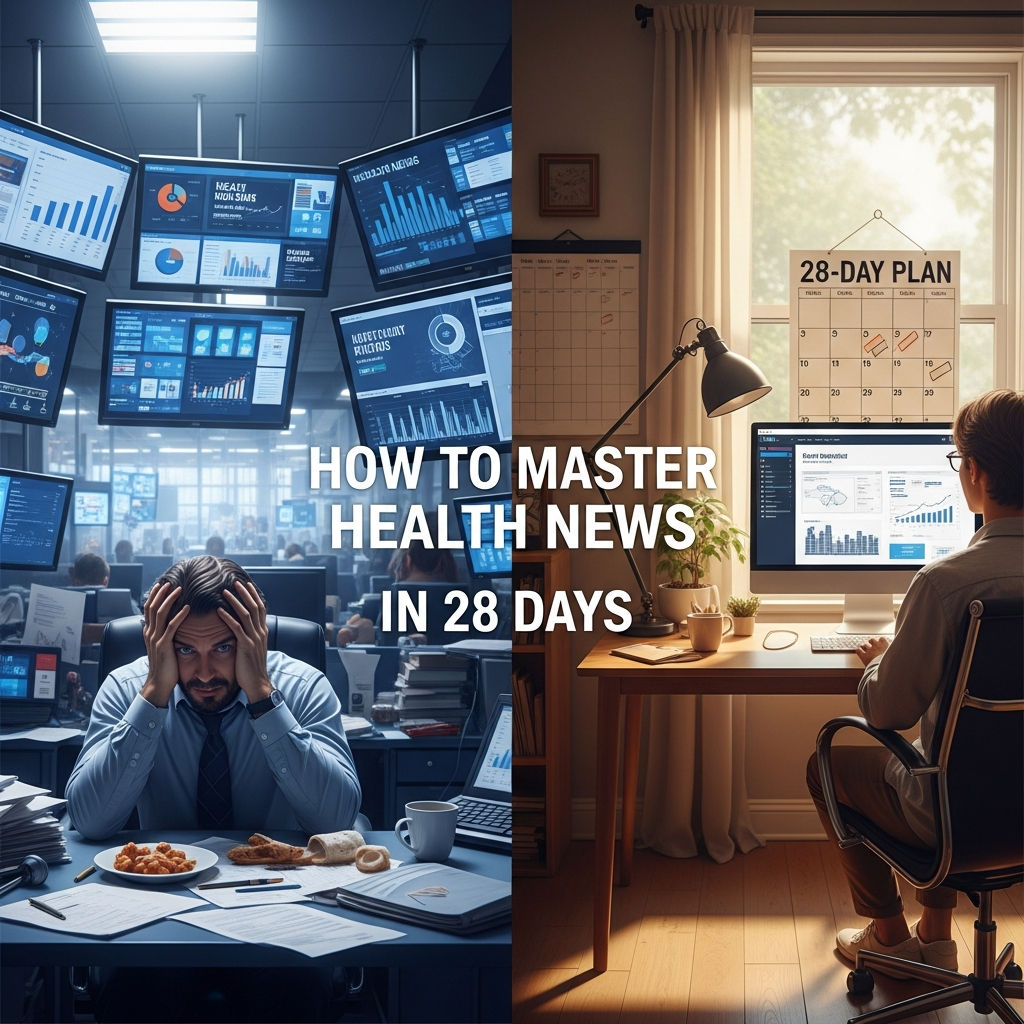
Curating Your Feed
On days 22 through 24, unsubscribe from sensationalist newsletters and follow reputable science communicators. Look for medical doctors (MDs) or PhDs who specialize in “debunking” rather than “promoting.” Tools like Google Scholar Alerts can notify you when new research is published on specific topics you care about, such as “Type 2 Diabetes” or “Cardiovascular health.”
The “Sober Second Look” Habit
On days 25 through 27, practice the “24-hour rule.” When you see a shocking health headline, wait 24 hours before changing your behavior or sharing it. Usually, within a day, expert scientists will have published critiques of the study, providing the necessary context that the initial news report missed.
Day 28: Becoming the Educator
On the final day, test your knowledge by explaining a complex health topic to a friend or family member. If you can explain the difference between a study’s findings and the media’s interpretation of those findings, you have officially mastered health news.
Conclusion: The Lifelong Journey of Health Literacy
Mastering health news in 28 days isn’t about memorizing medical textbooks; it’s about developing a critical lens. Science is a moving target, and today’s consensus may be tomorrow’s outdated theory. By prioritizing peer-reviewed sources, understanding the difference between absolute and relative risk, and remaining skeptical of sensationalist headlines, you empower yourself to make better decisions for your longevity.
Remember, the goal of health news should be to inform your lifestyle, not to cause fear. With these tools in your arsenal, you can navigate the digital health landscape with confidence, ensuring that your wellness journey is guided by facts rather than fads.