LG opens Seoul robot data factory with NVIDIA
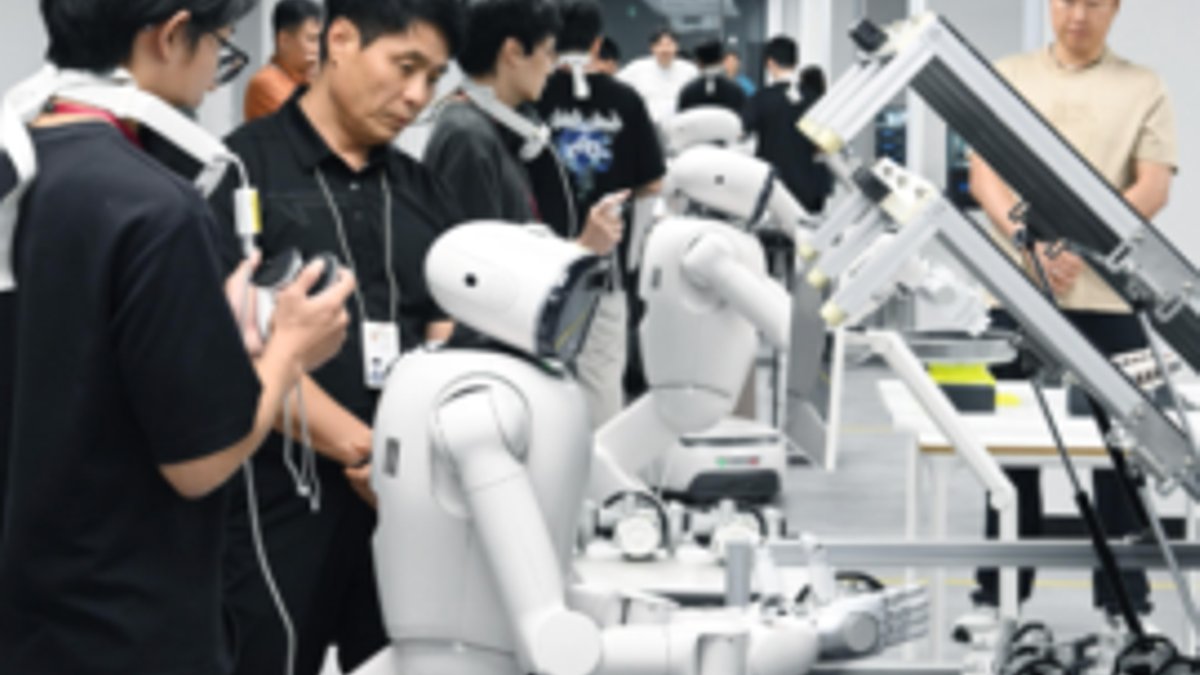
LG Electronics is building a 10,000-square-meter facility in Seoul where robots will learn to clean homes, assemble parts, and handle logistics—all while feeding data into a system designed to improve their performance over time. The Data Factory, set to open by the end of 2026, marks a major step in LG’s push to merge its decades of manufacturing experience with NVIDIA’s robotics technologies, creating what the company calls a “data flywheel” to refine robot behavior through repeated practice and real-world feedback.
The facility will house hundreds of robots across four floors, including LG CLOiD™ home robots practicing cleaning tasks in replicated living spaces and industrial robots simulating assembly work in a mock factory environment. Separate areas will train robotic hands for logistics automation and test other applications. Unlike a traditional lab, the Data Factory is designed to generate, validate, and refine data continuously, using both real-world interactions and synthetic simulations.
The collaboration with NVIDIA is central to the project. LG will integrate NVIDIA Omniverse, Cosmos open-world models, and the Isaac robotics platform to process and augment the data collected. By 2026, LG expects to accumulate 100,000 hours of training data, equivalent to roughly 12 years of robot operation, through a mix of real-world testing and synthetic generation. This data will feed into LG’s Robot Foundation Model (RFM), a core technology for developing advanced humanoid robots.
Read Also: Alex Eala Wins WTA Title, Enters Top 20
LG’s investment in robotics extends beyond the Data Factory. The company has already deployed its CLOiD home robots at scale, collecting data from real-world use. It also established a Robotics Business Center last month, reporting directly to the CEO, to coordinate efforts across LG’s manufacturing, logistics, and consumer divisions. The goal is to combine hardware expertise, such as actuators and sensors, with software capabilities to position LG as a full-stack robotics provider.
NVIDIA’s role in the project reflects a broader trend in robotics development, where synthetic data and simulation tools reduce the time and cost of training physical robots. By using Cosmos to generate virtual environments, LG can simulate millions of scenarios, such as moving objects or moving through cluttered spaces, without requiring physical robots to perform them repeatedly. The result is a faster, more efficient learning cycle, though it also raises questions about how closely synthetic data mirrors real-world conditions.

Alex Eala Wins WTA Title, Enters Top 20


