NIH ends South Africa research freeze
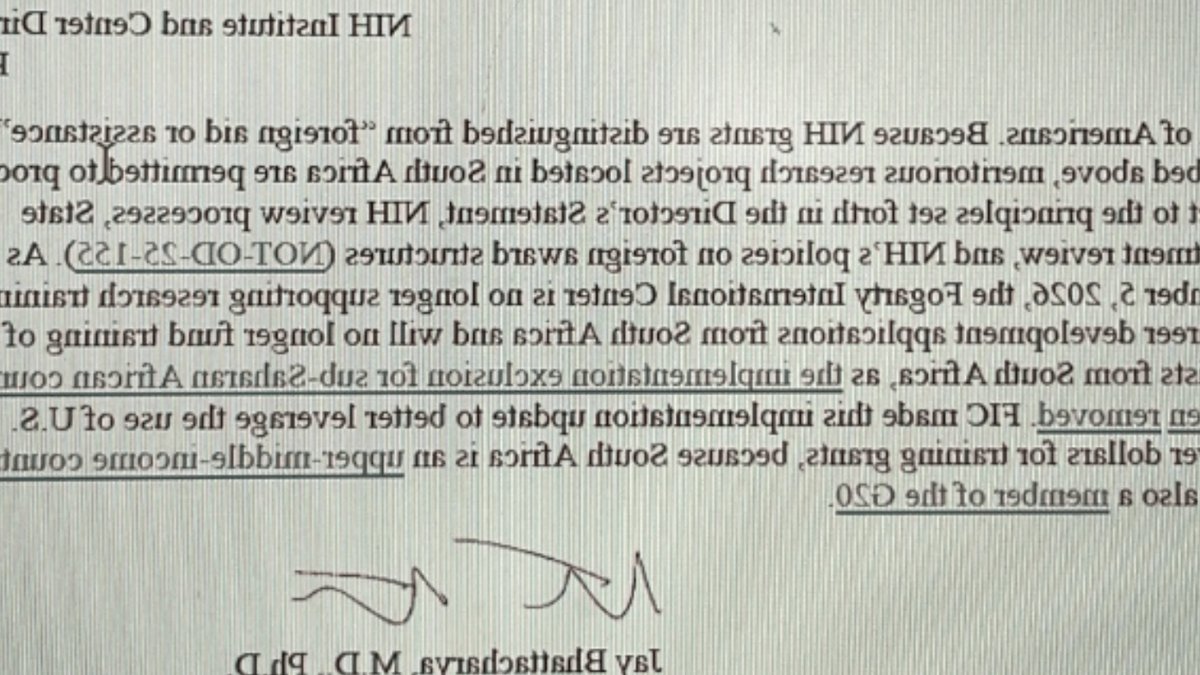
The National Institutes of Health ended its ban on funding research projects in South Africa, reversing a policy set by a 2025 executive order from President Donald Trump.
In an internal memo sent to staff this week, NIH director Dr. Jay Bhattacharya explained that the agency is not bound by Trump’s order, which stopped all “foreign aid or assistance” to South Africa. The memo, obtained by reporters, noted that NIH grants serve a different purpose by supporting international scientific collaboration.
NIH argues its funding is not foreign aid
Bhattacharya stated that research projects in South Africa may move forward if they meet NIH review standards, State Department oversight, and the agency’s rules on foreign award structures. He pointed out that Congress has given the NIH authority to work with international partners, and its funding does not fall under the Foreign Assistance Act.
Related: Mushroom supplement gains popularity among athletes
The memo included conditions: all research must have a strong reason for being conducted abroad and must show potential to benefit Americans’ health.
The U.S. and South Africa have worked together for decades, especially on HIV and tuberculosis research. That partnership stopped in February 2025 when Trump issued the executive order, citing two actions by the South African government.
Trump’s order misrepresents land reform
The first claim involved South Africa’s land reform law, which allows expropriation of property without compensation in limited cases. The law applies to unused municipal land and does not single out any ethnic group, despite the order’s suggestion that it targets Afrikaners.
The second reason was South Africa’s case against Israel at the International Court of Justice, which Trump said conflicted with U.S. foreign policy. The order required federal agencies to stop aid to South Africa but allowed exceptions if agency heads determined the aid was necessary.
Related: Make Perfect Matcha at Home Easily
Bhattacharya’s memo avoided political discussion, focusing instead on the legal difference between NIH grants and foreign aid. The decision to resume funding indicates the agency believes its work qualifies for an exception, though it will still face State Department review.
While the NIH’s decision restores an important funding source, it does not settle the larger diplomatic dispute between the two countries. Other agencies, like the U.S. Agency for International Development, must still follow the executive order unless they obtain similar exemptions.
The NIH appears confident that science can proceed separately from politics when Congress has already approved the work.

Mushroom supplement gains popularity among athletes


