Taliban Rule Dismantles Afghan Women’s Healthcare
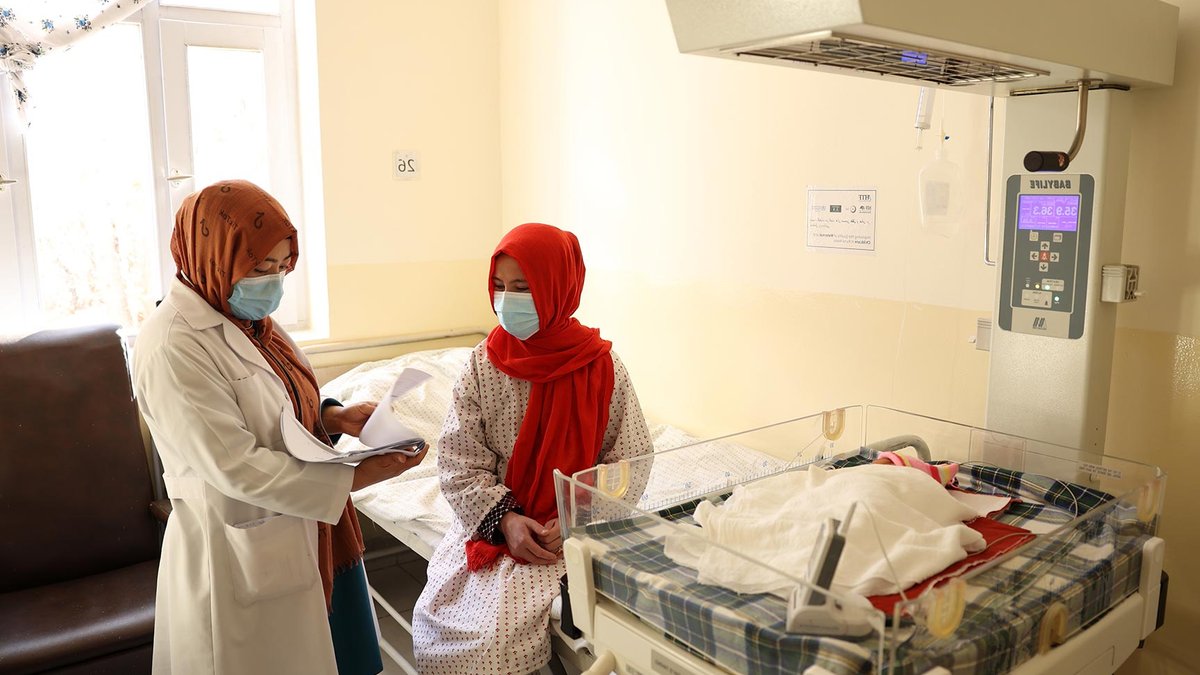
Last week marked five years since the Taliban stormed back to power in Afghanistan. The country’s women have seen their rights constricted from all sides—now, shrinking healthcare services and restrictions are making it difficult, sometimes impossible, for women to reach them. The past half decade of rule has seen women and girls barred from secondary and higher education, stripped of the right to leave their homes unaccompanied by men, or speak, sing, or read aloud in public.
Restrictions on female medical professionals
December 2024 saw the Taliban close yet another door, forbidding women from engaging in medical and health education, leaving the country’s pipeline of future female doctors, nurses and midwives severely weakened. The now guaranteed shortage of female health workers is compounded by restrictions on women being treated by male medical professionals, which is banned in multiple regions. Women are also banned from working in humanitarian agencies, raising the bar to access to care even higher.
UNICEF has warned that Afghanistan could lose up to 5,400 female healthcare workers by 2030 if restrictions on girls’ education and women’s employment continue. As many as 9,600 health workers could be lost by 2035, the agency said.
Related: Indonesian Health Minister to Run for WHO Director-General
Afghan women often rely on female health professionals because of social expectations, gender segregation and restrictions on interactions between men and women. The presence of a female health worker makes it possible to speak openly about sensitive health problems—and can be the difference affecting whether many women seek care at all.
Systemic barriers to care
“With a male doctor, we cannot talk freely,” one woman receiving care from a female health worker in southeastern Ghazni province told Health Policy Watch. “With her, we can say everything.”
For women like Zinab Mohammadi, the challenges have shifted from immediate physical danger to structural barriers. After seven years of trying to have a child, she travelled 240 kilometres from her home city of Bamiyan to the capital, Kabul, in May 2020. There, she gave birth to a boy at the Medecins Sans Frontieres (MSF) supported maternity wing of Dasthe-e-Barchi hospital in the west of the city.
Related: RSV and maternal vaccines protect European health
She named him Omid, meaning “hope” in Dari. Moments after she gave birth, masked gunmen stormed the maternity ward and opened fire. Twenty-four people, including 16 mothers, an MSF midwife and two children, were killed. One gave birth to a healthy child in the middle of the terror attack. Zinab survived, along with more than 100 people who escaped to safe rooms throughout the hospital. Her son Omid, less than half a day old, did not.
“I had only four hours with my son,” she told Health Policy Watch. MSF later said the massacre in the maternity wing had been deliberately targeted, although it could not establish with certainty who carried out the attack or why. The assailants remain unidentified, and MSF withdrew from the maternity unit the following month, saying it could no longer put staff at risk of renewed attack. The 55-bed facility had provided free specialist maternity care and assisted almost 16,000 deliveries in 2019.
The attack came fifteen months before the Taliban swept back into Kabul. Six years later, Mohammadi’s second maternity experience reflects how the dangers facing Afghanistan’s women have evolved under their rule. Not an armed attack on a hospital, but the threats posed by a system in which distance, money, movement restrictions, a humanitarian funding crisis and dire shortage of female health workers stand in the way of women receiving care in time.
Related: Mushroom supplement gains popularity among athletes
“Allah blessed me with a daughter last year,” Mohammadi said. “An elderly woman in our neighbourhood helped me a lot during the birth. But with many charity organisations gone and the Taliban’s restrictions on women’s freedom of movement, it has become extremely difficult for mothers like me to seek the care and support we need.”
For women like Mohammadi, the existence of equipped hospitals—while still scarce—is no longer the only challenge. It is whether they can reach it, afford the journey and treatment, travel with a required male relative, and find an appropriately qualified female health worker when they arrive.

Red Cross condemns attacks on Ebola responders in DRC


